
eCommerce Optimization Services: Boost Your Online Sales
OuterBox delivers end-to-end eCommerce optimization services that combine SEO and CRO to grow qualified traffic and maximize conversions. Since 2004, our 300+ digital marketing experts have launched 500+ eCommerce websites and built 150+ custom integrations across platforms like Shopify, Magento, BigCommerce, WooCommerce, and NopCommerce.
"*" indicates required fields
"*" indicates required fields



eCommerce Optimization Services: Boost Online Sales With SEO + CRO
We align search visibility with conversion science to turn more visitors into customers, leveraging organic search’s 4% conversion rates compared to paid ads’ 2-3%. Our integrated approach spans technical SEO, content, UX, site speed, and rigorous A/B testing—improving rankings, user experience, and revenue across devices.
What’s Included in Our eCommerce Optimization Services
A comprehensive program built to increase discoverability and conversion rates, tailored to your goals and platform.

eCommerce SEO Roadmaps for Revenue Categories
Your catalog needs an SEO plan that knows which categories, products, and queries actually move revenue. Strong eCommerce SEO starts with search demand, but the roadmap has to account for margin, inventory, seasonality, and the pages your team can realistically improve.
- Keyword research should separate informational traffic from category, product, brand, and comparison searches with buying intent.
- Technical audits should identify the crawl, indexation, duplicate-content, and internal-link issues limiting category growth.
- Position 11-30 opportunities should be grouped into quick-win queues before the team chases lower-probability head terms.
- Roadmaps should assign ownership across marketing, merchandising, content, and development so priority work keeps moving.
- Reporting should tie rankings and traffic back to revenue categories instead of generic visibility charts.
Revenue-focused roadmaps help your team see which search work should ship first and why it matters to the catalog.
CRO Testing That Finds Checkout and Product-Page Friction
Your traffic is only valuable when shoppers can move from product discovery to checkout without second-guessing the next step. Conversion rate optimization gives eCommerce optimization services a testing discipline, so design changes are judged by behavior instead of opinion.
- Product-page tests should focus on image depth, price clarity, fit guidance, review placement, shipping language, and add-to-cart confidence.
- Cart and checkout tests should remove hesitation around promo codes, delivery timing, payment options, account creation, and error states.
- Heatmaps and session recordings should show where shoppers stall before a hypothesis reaches the test queue.
- Statistical confidence should decide which variations become permanent before the loudest preference turns into the default.
- Test logs should preserve wins, losses, and repeatable lessons so the same friction does not get rediscovered later.
Testing turns conversion friction into a prioritized queue your team can fix, measure, and keep learning from.
Product and Category Pages Built to Rank and Sell
Product and category pages carry the most important work on an eCommerce site: they have to rank, explain, reassure, and convert. Thin copy, weak filters, missing schema, and scattered internal links make those pages underperform even when the broader marketing plan is sound.
- Category structures should match how buyers shop by product type, brand, use case, problem, size, material, or compatibility.
- Product templates should support useful copy, specifications, FAQs, reviews, breadcrumbs, and structured data fields for price and availability.
- Filter logic should expose valuable demand patterns without creating crawl traps or thin indexed combinations.
- eCommerce website design should make product cards, comparison paths, and merchandising modules easier to maintain.
- Internal links should move authority from guides, categories, and related products into the pages most likely to produce revenue.
Product pages and category paths perform better when search structure and buyer confidence are built into the same experience.
Content Systems for Product, Category, and Editorial Growth
Your content system has to serve buyers who are comparing products, checking specs, validating fit, and deciding whether your store feels trustworthy. SEO copywriting supports that path when product, category, and editorial copy all map back to search intent.
- Keyword-to-page maps should assign terms to the right destination instead of letting product pages, categories, and articles compete.
- Category copy should help buyers choose between product groups without burying merchandising priorities below generic SEO text.
- Product descriptions should explain differentiators, attributes, use cases, and constraints in language shoppers can act on.
- Editorial content should support high-intent questions, comparisons, and buying barriers that category pages cannot answer cleanly.
- Refresh plans should catch stale pages before last year’s rankings turn into this year’s quiet revenue leak.
Content earns more when every page has a clear search job, a clear buyer job, and a place in the catalog.
Technical SEO and Site Speed That Protect Every Session
Your storefront can lose revenue before shoppers even read a product description. Core Web Vitals optimization protects the technical side of eCommerce optimization by keeping crawl paths, templates, and load behavior from working against the channel plan.
- Crawl checks should catch blocked product pages, redirect chains, duplicate templates, sitemap gaps, and canonical conflicts early.
- Performance work should focus on LCP, INP, CLS, image delivery, JavaScript weight, caching, and mobile rendering.
- Staging checks should catch speed regressions before new features reach customers or search engines.
- Product and category templates should stay fast enough to support filters, reviews, recommendations, media, and promotions.
- Monitoring should connect technical changes to organic sessions, conversion rate, and revenue risk instead of stopping at lab scores.
Technical health gives every visitor and crawler a cleaner path through the store, especially as the catalog gets heavier.
SEO-Aware Development Across Shopify, Magento, BigCommerce, and WooCommerce
Platform decisions shape how easily your team can improve the storefront after launch. Shopify, Magento, BigCommerce, WooCommerce, and NopCommerce can all support growth, but each one needs development choices that protect crawlability, conversion, integrations, and maintenance.
- Critical content should render in a way search engines and shoppers can access without waiting on fragile scripts.
- Structured data, breadcrumbs, pagination, faceted navigation, and product variants should be planned before templates are locked.
- Checkout and cart updates should protect speed, tracking, accessibility, and error handling while reducing friction.
- Web development consulting should pressure-test apps, custom features, integrations, and release plans before they create technical debt.
- Documentation should give internal teams repeatable patterns for future product launches, promotions, and template changes.
Development choices hold up longer when SEO, CRO, analytics, and merchandising requirements are part of the build from the start.
Authority Building That Moves Equity Into the Catalog
Your authority work should help revenue pages instead of sitting off to the side as a monthly activity report. Strong link building for eCommerce connects linkable assets, topical depth, and internal linking so authority reaches the catalog pages that need it.
- Buyer guides, comparison resources, research, and category explainers should earn attention from sources that make sense for the market.
- Editorial clusters should support priority categories instead of creating disconnected blog traffic with no revenue path.
- Internal links should move equity from informational content into product, category, and collection pages.
- Anchor strategy should reinforce how buyers describe the products, problems, materials, brands, or use cases in the catalog.
- Backlink reviews should flag low-quality patterns before they become a liability for future growth.
Authority compounds when useful content, earned links, and internal equity all point back toward the catalog.
eCommerce Analytics That Turn Channel Data Into Decisions
Your reporting should explain what changed in the store and what the team should do next. Analytics services support eCommerce optimization services when GA4 events, purchase funnels, product-level attribution, and category reporting are configured well enough to guide real decisions.
Product-level data can show where organic traffic reaches the wrong items. AOV by category can shift SEO, CRO, merchandising, and paid priorities. Checkout events can separate traffic-quality problems from site-friction problems. Search Console, GA4, rank tracking, and revenue data should be reconciled often enough that the team trusts the trend before the monthly report.
That QA loop matters because bad data creates bad priorities. Measurement should catch tracking gaps, template changes, feed issues, and attribution blind spots before leadership starts making budget decisions from broken dashboards.
Reporting works when your team can see the revenue signal, the channel context, and the next decision in the same view.
Data-Driven eCommerce Growth Through Optimization
We explain how our team uses data and A/B testing to refine your landing pages, ensuring that every visitor has a clear path to purchase. By focusing on user psychology and proven design strategies, we help you lower acquisition costs and increase the lifetime value of your customers across all marketing channels.
See how we optimize your eCommerce traffic for better returns.
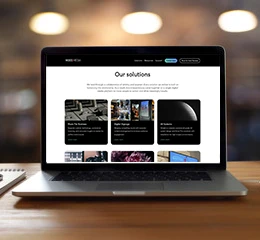
From the Mood Media CRO case study: 239% increase in form submissions after optimizing and testing lead-generation forms.
eCommerce Optimization Services
Get a Free eCommerce Optimization Services Quote
Talk with our eCommerce optimization experts for recommendations, scope, pricing, and timelines. Call 1-866-647-9218 (9–5 EST) or submit the form.
Services
"*" indicates required fields
Brands We’ve Helped Grow







A Performance Marketing Agency
OuterBox is a leader in eCommerce SEO and CRO. We’re platform-agnostic, working across Shopify, Magento, BigCommerce, WooCommerce, and NopCommerce to implement strategies that climb SERPs and maximize online sales.
20+ Years
Digital Marketing Agency
1000+
Successful Client Partnerships
2M+
Page #1 Google Rankings
300+
USA-Based, In-House Experts
Why eCommerce Brands Choose OuterBox
We pair proven eCommerce expertise with integrated SEO and CRO to deliver compounding results.

-
Experience: 20+ years focused on eCommerce
-
Team: 300+ specialists across SEO, CRO, dev, and analytics
-
Track Record: 500+ eCommerce launches; 150+ custom integrations
-
Approach: Integrated SEO + CRO with continuous testing and iteration
-
Reporting: Transparent, action-oriented reporting tied to revenue
Typical Agency
-
Experience: General digital marketing experience
-
Team: Small, generalized team
-
Track Record: Limited complex eCommerce implementations
-
Approach: Channel-siloed tactics with minimal experimentation
-
Reporting: Basic KPIs with limited insights

Improving site speed and Core Web Vitals enhances user experience and can positively influence both organic rankings and conversion rates—making performance optimization a high-ROI priority, as 0.1s speed improvements can increase retail conversions by 8%. Learn about our website speed optimization process>
Unlock Your Business’s Potential
Send us your website for a free quote and strategy session from OuterBox, tailored to drive success.
Need an expert now? Call 1-866-647-9218
"*" indicates required fields
"*" indicates required fields




eCommerce Optimization FAQs
How long does it take to see results from eCommerce SEO and CRO?
Timelines vary by competition, site health, and scope. Most clients see noticeable improvements within 3–6 months, with compounding gains as testing and optimization continue.
Can you work with any eCommerce platform?
Yes. We have experience across Shopify, Magento (Adobe Commerce), BigCommerce, WooCommerce, and NopCommerce—and can optimize virtually any platform.
Do you offer fixed packages for eCommerce optimization?
No. We customize engagements based on your goals, market, and current performance. You’ll receive a detailed scope and quote aligned to your needs.
How do you measure success?
We track rankings, qualified organic traffic, conversion rates, revenue, and user experience metrics (e.g., Core Web Vitals). Reports include insights and next steps tied to business outcomes.
What makes OuterBox different?
Since 2004, we’ve specialized in eCommerce SEO and CRO. Our 300+ experts deliver integrated strategies, supported by 500+ eCommerce launches and 150+ custom integrations.
How do SEO and CRO work together?
SEO increases qualified traffic while CRO improves the percentage of visitors who convert. Better engagement and conversion can also reinforce positive SEO signals—creating a growth loop.
What does your CRO testing process look like?
We audit funnels, form hypotheses, prioritize tests, and run A/B or multivariate experiments. Wins are implemented, learnings are documented, and new tests are queued for continuous improvement.
Related Articles: eCommerce Optimization Services

CRO, Digital Marketing | 9 min read
Let’s face it, most of the conventional wisdom about conversion rate optimization (CRO) and digital marketing is geared towards typical eCommerce brands. That means even…

CRO | 6 min read
In health marketing, your ability to turn impressions and engagement into conversions will always depend on the quality of your landing pages. Evolving user expectations…

CRO | 5 min read
In a society with a short attention span, your website’s first impression could be your last. That’s why it’s essential to make every interaction count…