
CRO Consultant Services That Turn Traffic Into Revenue
Traffic is expensive. CRO consultant services make sure more of that traffic becomes qualified leads, sales, quote starts, completed applications, and checkout completions before your team spends more to fill the same funnel again.
"*" indicates required fields
"*" indicates required fields






CRO Consultant Support For The Places Your Funnel Quietly Loses Money
Most conversion problems do not look dramatic from the outside. The traffic report looks fine, the landing page looks polished, and the form technically works. But buyers still leave before they ask for a quote, add to cart, complete checkout, or take the next step your marketing budget was supposed to earn.
That is where conversion rate optimization consulting helps turn analytics, UX evidence, and test priorities into a clearer revenue plan.
The goal is not to test random button colors. Your site should turn more existing traffic into revenue, give visitors a clearer path, give leadership cleaner analytics, and give the team a continuous testing rhythm that compounds beyond the first win.
What’s Included in CRO Consulting
A full-funnel, test-and-learn program tailored to your goals, site complexity, and budget.

Conversion rate optimization services that start with understanding what your site is actually losing
Your conversion rate tells you a number, but the audit tells you why that number is what it is. Businesses lose an estimated 35 percent of sales to poor user experience, and most of that loss is invisible without a structured diagnostic. Conversion rate optimization consulting starts here because optimizing without a baseline is guessing with your budget.
- Your current conversion funnel mapped from first visit to completed action so every drop-off point is visible and quantified
- Your analytics configuration reviewed for accuracy so decisions get made on clean data, with the same rigor applied to analytics setup across your measurement stack
- Your highest-traffic pages audited for friction points (form length, page speed, layout, trust signals) that suppress the conversions your traffic should produce
- Your competitor conversion paths benchmarked so your team sees where the gap is and what closing it is worth in revenue
- Your audit findings prioritized by estimated revenue impact so the first tests target the changes most likely to move the number
Your optimization program starts with a clear picture of what is costing conversions and what fixing it is worth.
Data collection for conversion rate optimization that shows what your visitors actually do before they leave or convert
Your analytics show you what happens on your site, but behavioral data shows you why. The average web form abandonment rate sits at 67.9 percent, which means two out of three visitors who start a form leave before finishing. Understanding where and why those drop-offs happen is what separates data from direction.
- Your visitor sessions recorded and analyzed so your team sees exactly where users hesitate, scroll past, or abandon the page
- Your heatmaps and scroll depth data mapped to show which page elements earn attention and which ones get ignored
- Your form analytics tracking field-level abandonment so you know which fields cost you completions, informed by the same call tracking data that connects offline conversions to online behavior
- Your conversion paths segmented by traffic source, device, and landing page so patterns emerge across audience segments
- Your qualitative feedback (surveys, session recordings, exit polls) layered over quantitative data so the analysis captures intent alongside behavior
Your testing roadmap gets built on evidence of what visitors actually do, rather than assumptions about what they should do.
Conversion optimization strategy built around the revenue opportunities your data already revealed
Your data shows where visitors drop off, and the strategy decides which drop-offs to fix first and how to test the fixes. Only 20 percent of A/B tests reach statistical significance, which means most testing programs waste the majority of their experiments. A strategy built on prioritization and sample-size discipline produces more winners per quarter than one built on volume.
- Your testing hypotheses written with a predicted outcome, a measurable metric, and a minimum sample size so every test has a clear success condition before it launches
- Your test priorities ranked by expected revenue impact so the team works on the changes that compound fastest
- Your page variants designed to isolate one variable at a time so results get attributed to the change that caused them, applying the same precision to lead generation pages as to product and checkout flows
- Your testing calendar planned against your traffic volume so each test reaches statistical significance within a practical timeframe
- Your strategy accounting for seasonality, promotional cycles, and traffic fluctuations so test results reflect normal buyer behavior
Your conversion optimization services run on a plan that connects every experiment to a revenue outcome.
A/B testing and CRO implementation that moves winning variations into your live site without breaking what already works
Your test design determines whether results are usable or ambiguous, and a poorly structured test wastes weeks of traffic producing data that cannot be acted on. Brands with structured CRO programs see an average ROI of 223 percent, and that return comes from discipline in execution rather than volume of experiments. Your program benefits from 20+ years of testing methodology refined across hundreds of sites, which means fewer wasted experiments and faster paths to statistical confidence.
- Your A/B tests running on production traffic with proper sample sizes so results reach statistical confidence before any decision gets made
- Your test variants deployed without disrupting existing page performance, load time, or tracking integrity
- Your multivariate and split tests used where single-variable A/B testing cannot isolate the interaction effects between page elements
- Your winning variations documented with the data that proved them so the learning compounds across future tests and pages
- Your implementation handled through your existing platform (Shopify, WordPress, custom) so winning tests ship into the permanent experience, built on the same ecommerce web design foundations that support your broader digital program
Your conversion rate improves because every test is designed to produce an answer, and every answer ships.
Ongoing review cycles that keep your conversion rate compounding after the first wins
Your first round of tests produces wins, but the compounding happens in the cycles that follow. A 3 percent monthly improvement in conversion rate can nearly triple revenue over three years. That math only works if the review process keeps feeding the next round of hypotheses instead of stopping after the first gains.
- Your test results analyzed for secondary insights so a winning headline test also reveals what messaging resonates with your highest-value segments
- Your losing tests reviewed for learnable patterns so the team understands why visitors rejected the variant, not just that they did
- Your conversion benchmarks updated after each test cycle so gains are tracked cumulatively and regressions are caught early
- Your optimization expanded beyond the initial test pages to product pages, checkout flows, lead forms, and post-conversion experiences as data accumulates, guided by the same ecommerce optimization methodology that governs your broader program
- Your mobile and desktop experiences tested separately because conversion behavior diverges across devices, with results reviewed together because an extension of your team means your CRO partner is in the room when optimization decisions get made
Your conversion gains compound because every review cycle feeds the next round of hypotheses.
CRO reporting that connects every test to the revenue it produced and the decision it informed
Your CRO program produces test results, but results without context are just numbers. Sixty-eight percent of small businesses lack a structured CRO strategy entirely, which means most competitors are not even measuring what you are about to optimize. Reporting built for decision-makers translates test wins and losses into the revenue language your leadership team uses.
- Your test results reported with revenue impact so your leadership team sees what each winning variant is worth in annual value
- Your CRO performance tracked against the KPIs that matter to your business (revenue per visitor, cost per acquisition, lead quality score) rather than vanity metrics
- Your review sessions structured around what to test next, with every recommendation tied to a specific insight from the last cycle
- Your reporting integrated with your analytics and CRM so conversion improvements trace through to closed revenue, powered by the same web intelligence tools that connect every data point to a decision
- Your team receiving plain-language summaries alongside the data so stakeholders who do not live in analytics dashboards understand what changed and why it matters, because stewardship and accountability mean owning the clarity of every dollar’s outcome
Your leadership team makes faster optimization decisions because the reporting was built to answer their questions.
Real Brand Results
CRO Wins We've Shipped For Real Brands
Behavior changes. Revenue follows. OuterBox runs the same disciplined CRO loop across lead generation, eCommerce, insurance, industrial, and professional-services sites — find the friction, ship the fix, carry the learning to the next decision.
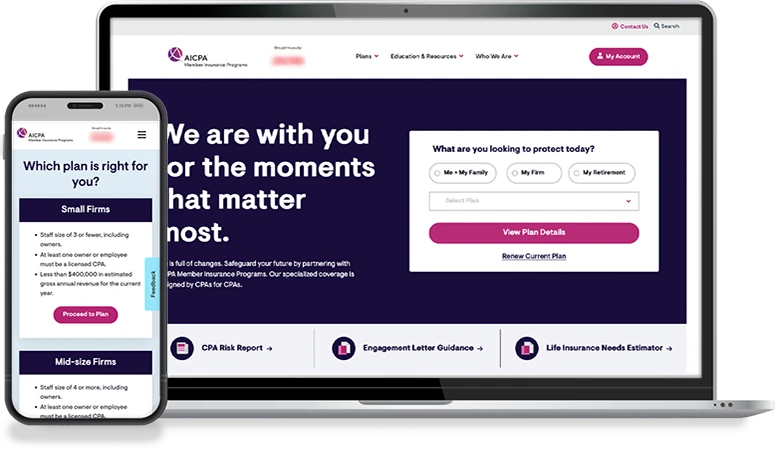
70% more quote starts. 40% more completed applications. OuterBox rebuilt AICPA Trust's personalized site experience so high-intent visitors resumed the path they came for instead of bouncing through unrelated product pages.

239% more lead-gen submissions. OuterBox redesigned Mood Media's lead form around a single-column layout, cut non-essential fields, and added inline validation. The friction came out, the conversions came in.

85.63% more form submissions. OuterBox dropped a global Quick Quote modal across TIE Industrial's funnel so industrial buyers never had to leave the page that already had them sold.
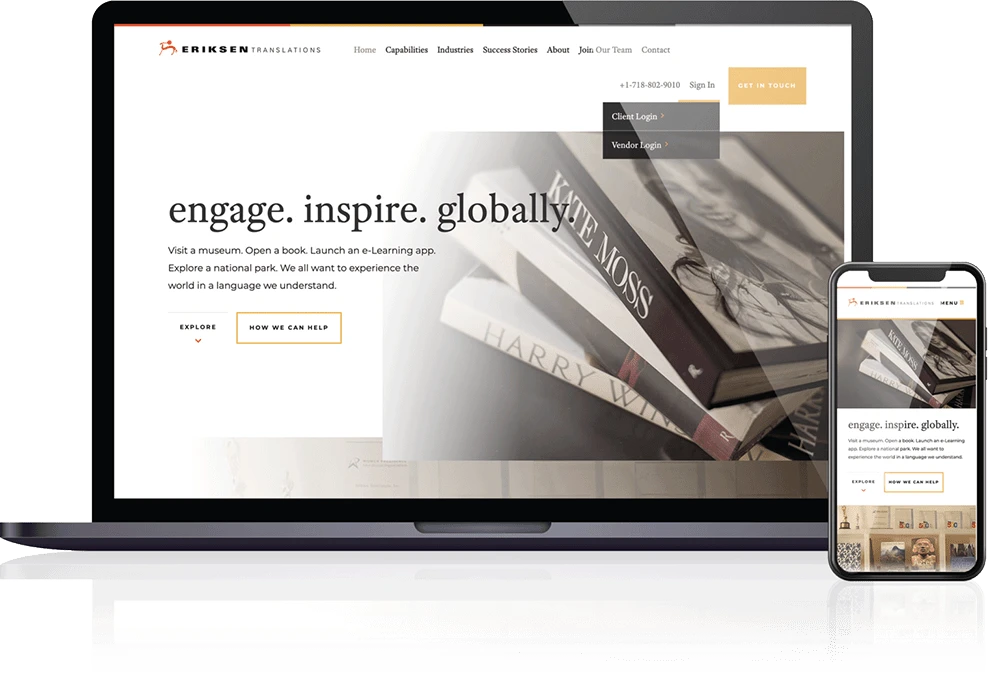
227.27% more form interactions. 22.35% higher progression rate. OuterBox killed banner friction on Eriksen Translations', surfaced a prominent CTA, and cleaned navigation — the lead path stopped fighting its own visitors.
What A CRO Consulting Engagement Can Include
OuterBox scopes CRO consulting around your business model — not a fixed checklist. An engagement can include any of the work below, scoped to where your funnel is actually leaking revenue:
-
Landing page audits and friction diagnosis — find the page-level moments where buyers hesitate.
-
Form analysis and field-level abandonment review — fix the questions costing you completions.
-
Cart and checkout testing — keep eCommerce optimization tied to revenue, not redesign for redesign’s sake.
-
Product and category page reviews — pricing clarity, trust signals, and message hierarchy.
-
Personalization planning — for known visitors, returning users, and high-intent segments.
-
Mobile-specific diagnosis — because conversion behavior diverges across devices.
-
Implementation support through your platform — Shopify, WordPress, BigCommerce, Magento, or custom.
-
Cross-channel hand-off — keep PPC management and eCommerce web design connected to the same conversion math.
What Affects CRO Consulting Cost?
CRO consulting cost depends on site size, traffic volume, page complexity, implementation support, and how many conversion paths need to be reviewed. Smaller websites usually have fewer templates and a shorter diagnostic path, so the engagement can focus on the highest-traffic pages, primary forms, and the clearest revenue leaks.
Larger websites need more segmentation. A multi-location, multi-channel, or enterprise site may require separate analysis by traffic source, device, audience type, product category, region, or business unit before the team can trust a test roadmap.
eCommerce websites add another layer because the buying path crosses product discovery, PDPs, cart, checkout, payment, shipping, promotions, and customer account behavior. The scope has to account for the platform, the catalog, and how fast winning changes can be implemented without disrupting the store.
OuterBox scopes the work after reviewing your current site, analytics access, conversion goals, and internal implementation capacity. That keeps the engagement tied to what your site needs, instead of forcing your funnel into a package built for somebody else’s conversion problem.
The right CRO consultant should show which fixes deserve budget first, not just hand over a list of possible tests.

How CRO Consulting Turns Existing Traffic Into Higher ROI
Learn how our CRO consulting magnifies your marketing efforts by optimizing the user journey. We analyze intent and streamline the experience to ensure your traffic converts into measurable sales and leads.
Watch how we use CRO and UX to turn your existing traffic into higher revenue.

“OuterBox helped us uncover UX friction we were blind to. Within the first quarter, our key landing pages and checkout saw meaningful lifts, and we finally have a repeatable testing program.” – Marketing Director, Growth & Digital @ Global Retailer (confidential)
CRO Consulting
Get a Free CRO Consulting Quote
Get answers to your questions and a detailed scope, pricing estimate, and timeline. Phone: 1-866-647-9218. Response within 24 hours, Monday–Friday, 9–5 EST.
Services
"*" indicates required fields
From Start-Ups to Fortune 500 Companies Our Clients Are Succeeding Online












Why OuterBox For Conversion Optimization Consulting
OuterBox has been improving digital performance since 2004, and CRO works best when it is connected to the rest of the program. Our 300+ USA-based, in-house experts (a.k.a. "Boxers") include strategists, analysts, designers, developers, SEO specialists, paid media specialists, and ecommerce operators who can diagnose the page and help ship the fix.
That structure matters. Your CRO work does not sit off to the side as a report full of opinions. Analytics, UX, development, SEO, PPC, and reporting all connect through the same operating system, so the recommendation can move from evidence to test to implementation without losing context.
OuterBox is also built for stewardship. The point is not more tests for the sake of test volume. The point is fewer wasted experiments, cleaner decisions, and a site that keeps learning from the traffic it already earns.
20+
Years Since 2004
300+
USA-Based Boxers
In-House
Cross-Functional Team
1
Operating System

Did you know? A/B testing landing pages typically increases conversions by around 12%, and nearly 74% of CRO plans lead to higher sales. Small UX improvements can unlock significant ROI from your existing traffic. Request a CRO consultation>
Get A CRO Consulting Scope
Tell us where your site is underperforming: leads, forms, checkout, quote starts, product pages, paid landing pages, or the reporting behind it all. Call (866) 647-9218 or fill out the form to talk through the funnel or reporting issue you want fixed.
"*" indicates required fields
"*" indicates required fields
Connected OuterBox Services
Pair CRO With The Rest Of Your Program

CRO Consulting FAQs
What does a CRO consultant do?
A CRO consultant diagnoses why visitors are not converting, prioritizes the highest-value fixes, and guides conversion rate optimization consulting across analytics, forms, checkout, landing pages, page structure, mobile behavior, personalization, and reporting.
How do I know if my website needs CRO consulting?
Your website likely needs CRO consulting if traffic is steady but leads, sales, quote starts, or checkout completions are weaker than expected. Other signs include high form abandonment, poor mobile conversion, unexplained paid-traffic waste, or analytics reports that do not explain where revenue is leaking.
How long does conversion rate optimization consulting take to show results?
Most clients start to see noticeable improvements within 60-90 days of implementing optimization strategies. Timing depends on traffic volume, test complexity, implementation speed, and whether the first priority is measurement cleanup or direct page testing.
Do we need more traffic before starting CRO?
Not always. More traffic helps formal A/B tests reach confidence faster, but lower-traffic sites can still benefit from analytics cleanup, friction diagnosis, qualitative review, form improvements, and prioritized UX fixes. The test method should fit the traffic you actually have.
What pages should a CRO consultant review first?
The first review should focus on pages closest to revenue: paid landing pages, product detail pages, product listing pages, carts, checkout, quote forms, demo forms, and high-traffic service pages. The right starting point is the page where traffic, friction, and revenue value overlap.
How does CRO work with SEO, PPC, and web design?
CRO turns traffic into outcomes, so it should sit close to every channel that sends visitors to the site. SEO brings qualified organic demand, PPC management buys targeted visits, and web design shapes the experience those visitors use. CRO helps the whole program convert more of what it already earns.
Related Articles: CRO Consulting Services

CRO, Digital Marketing | 9 min read
Let’s face it, most of the conventional wisdom about conversion rate optimization (CRO) and digital marketing is geared towards typical eCommerce brands. That means even…

CRO | 6 min read
In health marketing, your ability to turn impressions and engagement into conversions will always depend on the quality of your landing pages. Evolving user expectations…
CRO | 5 min read
In a society with a short attention span, your website’s first impression could be your last. That’s why it’s essential to make every interaction count…